



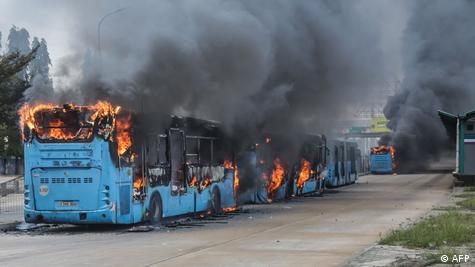
A Presidential Commission of Inquiry into Tanzania’s 2025 General Election has concluded its work with a detailed report that extends beyond documenting electoral unrest to raising deeper questions about accountability, state responsibility, and the evolving expectations placed on governance institutions across East Africa.
Presenting the findings to President Samia Suluhu Hassan in Dar es Salaam, Commission Chairperson Retired Chief Justice Mohamed Chande Othman detailed the human suffering and economic disruption experienced during the election period, while emphasizing the importance of sustained reforms to strengthen democratic processes, reinforce institutional credibility, and safeguard national cohesion.
Beyond the immediate circumstances of the unrest, the report shifts attention toward broader governance responsibilities, particularly how state institutions anticipate, manage, and respond to political tension during high-stakes electoral periods without allowing escalation into wider instability.
A key theme emerging from the report is the continued reliance on domestically anchored governance responses in Tanzania, particularly in addressing electoral management, political disputes, and post-election stabilization.
This reflects a broader regional trend across East Africa, where governments are increasingly placing greater responsibility on internal institutional systems, constitutional frameworks, and locally grounded dialogue mechanisms as the primary instruments for managing political disputes and reform pressures.
Rather than being viewed as an isolated national approach, this reflects an evolving governance pattern in which East African states are gradually redefining the balance between internal accountability mechanisms and external engagement in electoral dispute resolution and constitutional transitions.
Increasingly, this is being interpreted as part of a wider shift toward stronger domestic ownership of political processes, where legitimacy is increasingly anchored within national institutions rather than external validation frameworks.
At the core of the Commission’s recommendations is a call for a structured constitutional reform process, framed not as an immediate reaction to electoral tensions but as a long-term institutional commitment to strengthening governance stability and improving predictability in political systems.
The report further emphasizes that constitutional and electoral frameworks remain central to managing political competition across East Africa, particularly in environments shaped by demographic growth, expanding youth political engagement, and the increasing role of digital mobilisation.
Within this context, reform is increasingly being positioned as an instrument of institutional strengthening aimed at improving trust, expanding inclusion, and reinforcing the legitimacy of governance outcomes over time.
The findings also highlight the importance of institutional preparedness during politically sensitive periods, stressing early warning systems, inter-agency coordination, and rapid response frameworks as essential tools for managing emerging political risks.
Across East Africa, electoral cycles continue to expose the operational limits of governance systems, particularly in balancing constitutional rights, public order, and large-scale political mobilisation.
The Tanzanian report therefore reinforces a growing regional focus on accountability-driven institutional capacity, where governance systems are expected not only to administer elections, but also to take responsibility for preventing escalation and maintaining public trust throughout the electoral process.
Beyond political considerations, the report underscores an increasingly significant economic dimension: the direct accountability link between political stability and national economic performance.
Electoral disruptions often result in measurable economic losses affecting businesses, financial systems, and small enterprises, while also influencing investor confidence, trade continuity, and long-term development planning.
For emerging economies across East Africa, this strengthens the argument that institutional accountability and political predictability are not only governance concerns, but also key drivers of economic resilience and competitiveness.
A further key dimension of the report is its focus on the growing accountability challenges posed by digital platforms in political processes across the region.
Social media has become a central space for political participation, communication, and mobilisation.
However, it also introduces new accountability pressures, particularly around misinformation, unregulated narrative amplification, and the speed at which politically sensitive information spreads.
This evolving digital reality is pushing governments and institutions to rethink regulatory frameworks, strengthen information governance, and enhance media literacy while still safeguarding democratic freedoms.
Taken together, the Commission’s findings are increasingly being read not only as a national assessment of Tanzania’s 2025 electoral process, but also as part of a broader regional shift toward redefining accountability in governance systems.
Across East Africa, states are refining how responsibility is assigned within electoral systems, how institutions are held accountable during political crises, and how public trust is maintained in increasingly complex political environments.
The emerging trajectory points toward a gradual strengthening of domestic accountability structures as the foundation of political legitimacy, while governance systems continue adapting to evolving pressures shaped by demographic change, digital transformation, and rising civic expectations.